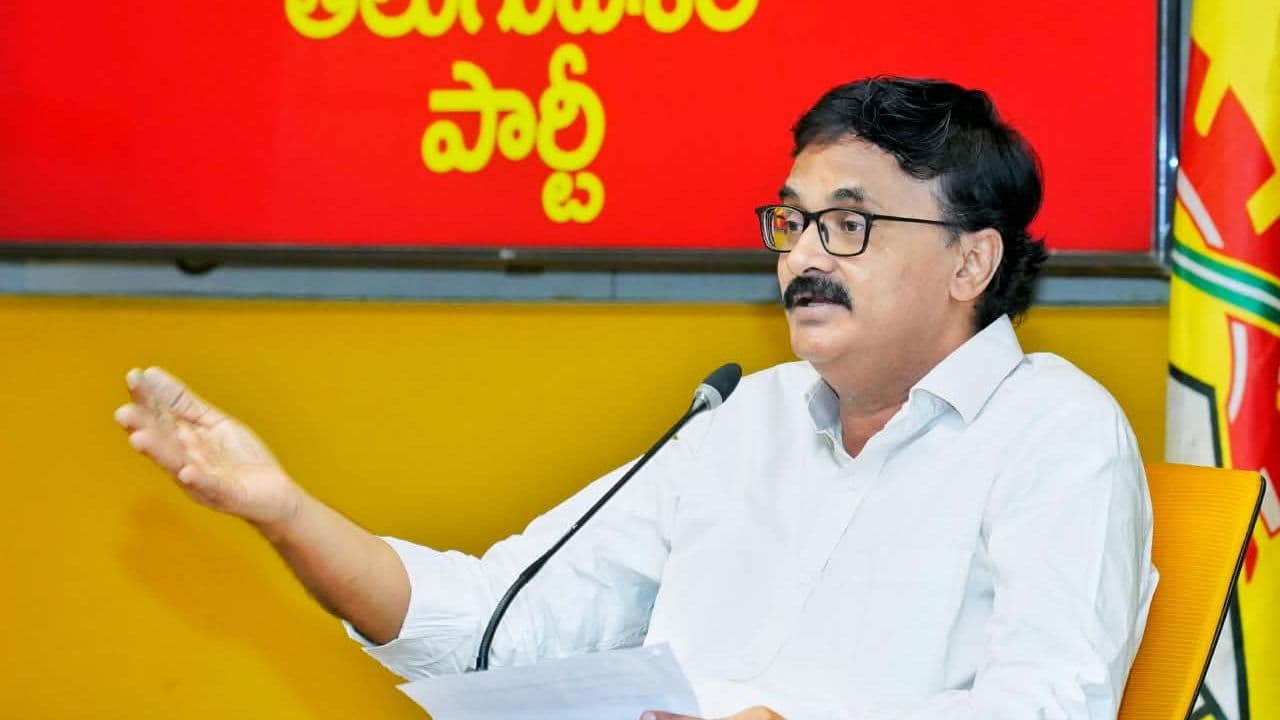
Mangalagiri: The Andhra Pradesh coalition government is undertaking a major overhaul of the education and employment ecosystem, with a focus on linking higher education to industry requirements and expanding job opportunities for the state's youth, AP Biodiversity Board Chairman and TDP spokesperson Neelayapalem Vijay Kumar said on Monday.
Addressing a media conference at the TDP Central Office, Vijay Kumar said the government had already filled around 22,000 government posts and was preparing notifications for another 10,000 positions as part of its proposed annual job calendar.
Recruitment drive in phases
According to Vijay Kumar, the first phase will focus on 1,523 university faculty posts. The second phase will include 149 Group-1 posts, covering positions such as Deputy Collectors, DSPs and Commercial Tax Officers, along with 2,185 posts in police, forestry, veterinary and welfare departments.
The third phase will cover Group-2 vacancies in departments including engineering, endowments and irrigation, besides posts such as Deputy Tahsildars and Sub-Registrars.
He said a notification for 2,995 DSC posts in school education was also being prepared, marking the coalition government's second major teacher recruitment drive.
Vijay Kumar criticised the previous YSRCP government, alleging that recruitment to several key posts had remained stalled for years. He said university faculty recruitment had been delayed for nearly 14 years, leaving public universities dependent heavily on guest faculty.
He also alleged that the APPSC had faced political interference and questioned aspects of its evaluation procedures. The present government, he said, was examining court and SIT findings to strengthen transparency in recruitment.
Private universities and skill development
The government has also introduced the AP Private Universities Bill 2026, aimed at attracting reputed educational institutions to the State. Vijay Kumar said land requirements would be reduced from 50 acres to 10 acres in major locations such as Visakhapatnam, Amaravati, Vijayawada, Tirupati and the CRDA region, while 15 acres would be required elsewhere.
The proposed framework would also facilitate vertical campuses and a 60-day single-window online clearance process.
Recognising that government employment alone cannot absorb every graduate, the government is simultaneously expanding industry-linked skill development. Vijay Kumar said a Hub-and-Spoke model would connect upgraded ITIs, polytechnics and engineering colleges with advanced skill-development hubs.
He said curricula were being developed in consultation with industry to ensure students acquire employment-ready skills.
Vijay Kumar said organisations such as SEEDAP had already trained large numbers of youth and facilitated placements in the private sector.
He said the government had set a three-year target to transform the higher education system and create stronger pathways from classrooms to careers.