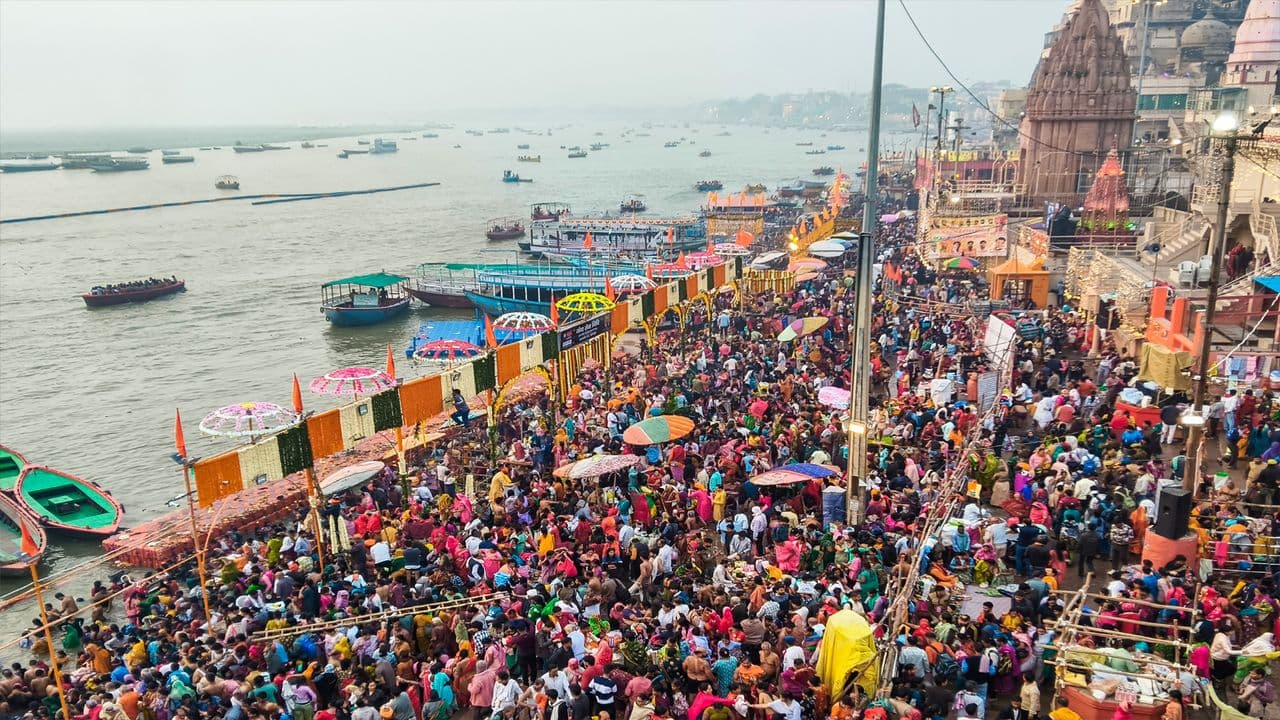
Kartik Purnima 2026: Kartik Purnima was celebrated with religious fervour across the country on Tuesday, with thousands of devotees visiting temples, taking holy dips in sacred rivers and water bodies, and participating in special prayers and Deepotsavam ceremonies. In Andhra Pradesh and Telangana, prominent Shiva temples witnessed a significant influx of pilgrims from the early hours of the day.
The occasion coincided with Dev Deepawali and Guru Nanak Dev Jayanti, adding to its religious significance. It also marked the culmination of the month-long Kartik Snan observed by devotees.
Varanasi and Prayagraj witness large gatherings
In Uttar Pradesh, Varanasi and Prayagraj witnessed large gatherings as devotees arrived at the ghats of the Ganga and Yamuna to perform sacred rituals.
In Varanasi, thousands of pilgrims took holy dips in the Ganga, offered prayers and lit lamps along the riverfront. The celebrations were particularly significant as Kartik Purnima coincided with Dev Deepawali, when the ghats of Kashi are illuminated with thousands of lamps.
In Prayagraj, devotees gathered at various riverfront locations to take holy dips and complete their month-long Kartik Snan.
Andhra Pradesh temples witness pilgrim rush
In Andhra Pradesh, Srisailam emerged as one of the major centres of Kartik Purnima celebrations. Devotees visited the Sri Bhramaramba Mallikarjuna Swamy temple and took holy dips at Pathala Ganga before proceeding for darshan.
The temple administration organised special religious programmes, including Lakshadeepotsavam and Pushkarini Harathi. Jwala Thoranam was also scheduled as part of the Kartik Purnima celebrations. The temple had made arrangements to manage the large number of pilgrims arriving from Andhra Pradesh, Telangana and neighbouring States.
Other prominent pilgrimage centres, including Srikalahasti and the Pancharama temples, also observed the occasion with special prayers and traditional rituals. The sacred day holds particular importance at Shiva temples across the State, where devotees light lamps and perform special worship.
Vemulawada, Kondagattu draw thousands in Telangana
In Telangana, Vemulawada witnessed a major influx of devotees at the Sri Raja Rajeshwara Swamy temple. Around 50,000 devotees visited the shrine on Tuesday, offering prayers and lighting lamps on the temple premises. Long queues were reported from the early morning hours.
The Sri Anjaneya Swamy temple at Kondagattu also received around 30,000 devotees. Large numbers of pilgrims visited the Sri Lakshmi Narasimha Swamy temple at Dharmapuri and the Sri Kotilingeshwara temple at Kotilingala. Authorities made security, traffic and crowd-management arrangements at the major pilgrimage centres.
Celebrations in Hapur, Puri and Yamunanagar
The festivities extended to several other parts of the country. In Uttar Pradesh's Hapur district, devotees gathered at Braj Ghat to take holy dips.
In Odisha's Puri, thousands of devotees assembled near the Shree Jagannath Temple to witness the Swarna Besha of Lord Jagannath.
In Haryana's Yamunanagar, pilgrims from Punjab, Haryana and Himachal Pradesh visited Kapal Mochan Sarovar for the traditional holy dip as part of the Kapal Mochan Mela. The celebrations coincided with Guru Nanak Dev Jayanti.
Special Deepmala decoration at Kashi Vishwanath Temple
The Kashi Vishwanath Temple in Varanasi organised a special Deepmala Shringar of Baba Shri Kashi Vishwanath during the daily Saptarishi Aarti from October 26 until Kartik Purnima.
The temple administration arranged the special decoration with lamps as part of the month-long religious observances, allowing devotees to witness the illuminated adornment of the deity during the evening rituals.
Kartik Purnima holds special religious significance
Kartik Purnima falls on the full-moon day of the Hindu month of Kartik and is regarded as an auspicious occasion for worship of Lord Shiva and Lord Vishnu. It is also known as Tripurari Purnima, associated with the legend of Lord Shiva's victory over the demon Tripurasura.
Devotees mark the day by taking holy dips, performing prayers, lighting oil lamps, offering charity and visiting temples. In several regions, illuminated lamps are also floated on rivers, temple tanks and other water bodies as part of traditional observances.