New Delhi: Andhra Pradesh Chief Minister N. Chandrababu Naidu has emphasised that adequate political representation for women and an increase in parliamentary constituencies in proportion to the country's growing population are essential for strengthening Indian democracy. He extended his full support to the Centre's initiatives on implementing women's reservation and undertaking delimitation of constituencies.
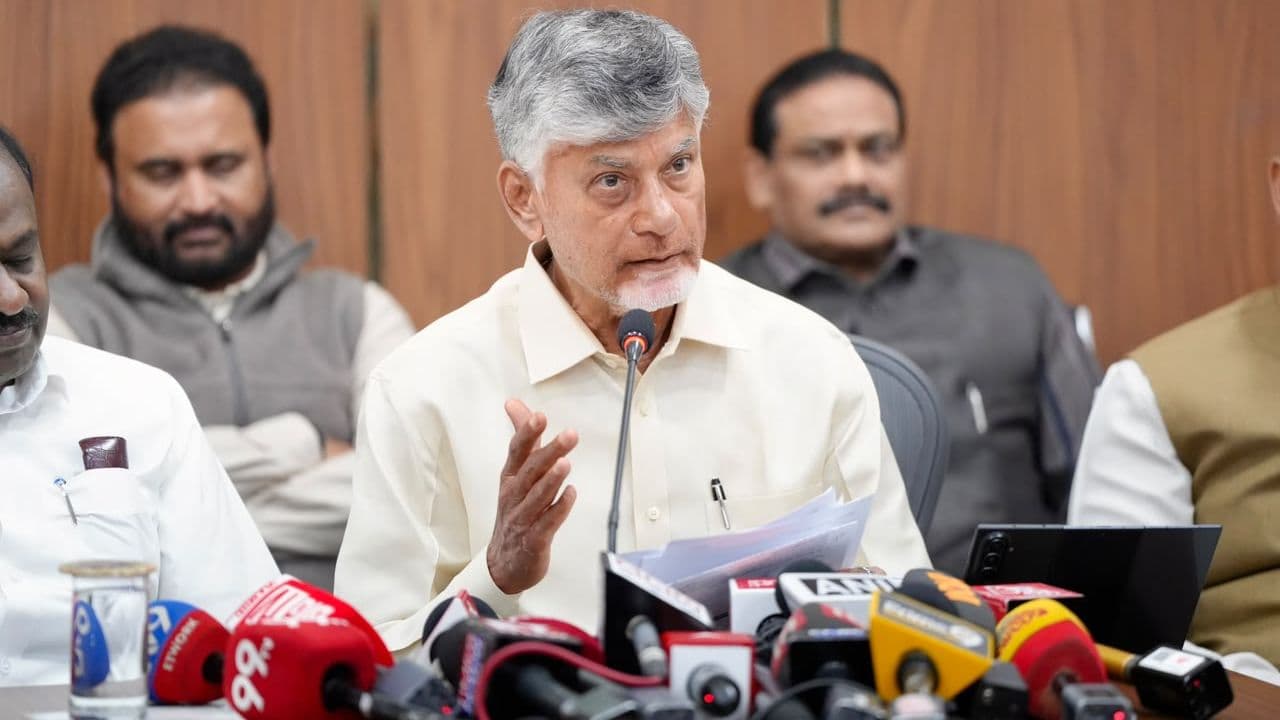
Addressing a media conference in New Delhi along with Union Minister H.D. Kumaraswamy, Union Ministers Ram Mohan Naidu and Pemmasani Chandrasekhar, and Members of Parliament, the Chief Minister said the NDA government under the leadership of Prime Minister Narendra Modi was moving forward with the national interest in mind. He said he had come to Delhi to extend his support to these important initiatives.
Naidu observed that the issue of women's reservation, which had remained pending for nearly three decades, had now reached a crucial stage. He described the decision to provide 33 per cent reservation for women in legislative bodies as historic.
Women have been making significant progress in education, employment, business and economic activities, demonstrating their capabilities across sectors. It is now time to ensure that they receive adequate representation in the political arena as well, he said. Social, economic and political participation are equally important for achieving comprehensive women's empowerment, the Chief Minister added.
Parliamentary Representation Must Grow with Population
Explaining the need for delimitation, Chandrababu Naidu recalled that the last major delimitation exercise was undertaken in 1976 based on the 1971 Census. The number of Lok Sabha seats has continued largely on the basis of the earlier population framework.
At that time, India's population was approximately 58.8 crore, with 543 Lok Sabha seats. With the country's population now estimated to be around 147 crore, continuing with the same number of parliamentary constituencies would not be appropriate, he said.
The Chief Minister pointed out that in 1971, one Member of Parliament represented approximately 10 lakh people, whereas the figure has now increased to around 27 lakh. If the number of parliamentary constituencies is increased by 50 per cent, each MP would represent approximately 18 lakh people.
Such an expansion would help MPs address public issues more effectively in Parliament and strengthen democratic representation, he said.
Southern States' Interests Will Be Protected
Recalling the contribution of Southern States to population stabilisation, Naidu said they had set an example for the rest of the country through effective population-control initiatives.
He said that during his tenure as Chief Minister of undivided Andhra Pradesh, special emphasis was placed on family planning and awareness campaigns, which helped reduce fertility rates.
However, he observed that the country now needed to focus on population management along with population control. Since fertility rates are relatively low in Southern States, using only the 2026 population figures as the basis for delimitation could potentially disadvantage these States.
States that performed well in population control should not lose political representation as a consequence, he emphasised.
In this context, Naidu proposed increasing the existing number of Lok Sabha seats in every State by 50 per cent. He said this approach would ensure that Southern States also benefit from the expansion while addressing the need for greater representation across the country.
He stressed that the delimitation exercise should ensure fairness to all regions and avoid unnecessary apprehensions or dissatisfaction among the public.
Andhra Pradesh's Lok Sabha Seats to Increase from 25 to 38
Explaining the proposed expansion, the Chief Minister said Andhra Pradesh currently has 25 Lok Sabha constituencies. A 50 per cent increase would take the number to 38.
Similarly, Tamil Nadu could have 59 seats, Karnataka 42, Telangana 26 and Kerala 30. With this expansion, the total number of Lok Sabha seats in Southern States would reach 195, he said.
Naidu stated that increasing parliamentary representation uniformly across States would protect the interests of Southern States while expanding democratic representation throughout the country.
He also pointed out that parliamentary representation had not kept pace with population growth, resulting in a significant increase in the number of people represented by each MP.
The proposed delimitation exercise would help address this imbalance. He stressed the need to complete the process before the 2029 general elections, which would also facilitate the implementation of women's reservation.
NTR Laid the Foundation for Women's Empowerment
Recalling the contribution of former Chief Minister N.T. Rama Rao, Chandrababu Naidu said NTR had introduced property rights for women and laid the foundation for their greater participation in public life by providing reservations in local bodies as early as 1986.
Naidu said that during his tenure as Chief Minister, he had worked towards women's economic empowerment through DWCRA self-help groups. Today, women associated with these groups in Andhra Pradesh are among the leading examples of women's collective economic empowerment in the country.
He said the State Government had introduced the 'Swayam' brand to provide better marketing opportunities for products manufactured by women and was working to take these products to international markets.
The government was also expanding opportunities for women in education and employment, including recruitment to positions such as drivers and conductors in the State Road Transport Corporation.
He noted that women's political participation had steadily increased following the introduction of reservations in local bodies in Andhra Pradesh. In the recent local body elections, women won eight out of the ten mayoral positions, he said.
The Chief Minister expressed happiness that women from different social backgrounds were assuming leadership roles as mayors of cities.
Women's Participation Is Vital for India's Future
Chandrababu Naidu said the Andhra Pradesh Legislative Assembly had already passed a resolution supporting women's reservation and forwarded it to the Centre. His government had consistently been urging the Union Government to implement the measure.
He appreciated Prime Minister Narendra Modi's efforts to ensure 33 per cent reservation for women and described the initiative as a historic step towards fulfilling the aspirations of women across the country.
Recalling earlier efforts, Naidu said that a Women's Reservation Bill had also been introduced during the tenure of former Prime Minister H.D. Deve Gowda, but it could not secure approval due to various reasons.
He urged political parties not to repeat the mistakes of the past and stressed that supporting greater political representation for women was a collective responsibility.
The Chief Minister appealed to all political parties to extend unanimous support to the Women's Reservation Bill without discrimination. He urged Members of Parliament to vote in favour of the bills during the upcoming parliamentary proceedings scheduled for the end of the month.
He cautioned political parties and elected representatives against committing what he described as a historic mistake by opposing the legislation.
Stating that Indians had already demonstrated their capabilities globally in technology and leadership, Naidu said the country needed effective women's leadership to achieve greater progress.
Women could play a more active role in national development when they achieved social, economic and political empowerment, he said.
He expressed confidence that greater participation of women in governance and leadership would help India achieve its ambition of becoming a global leader.
Naidu concluded by stating that women would reject those who opposed the Women's Reservation Bill. He called upon all political parties to act collectively, keeping national interests, the future of women and the expansion of democratic representation in mind.