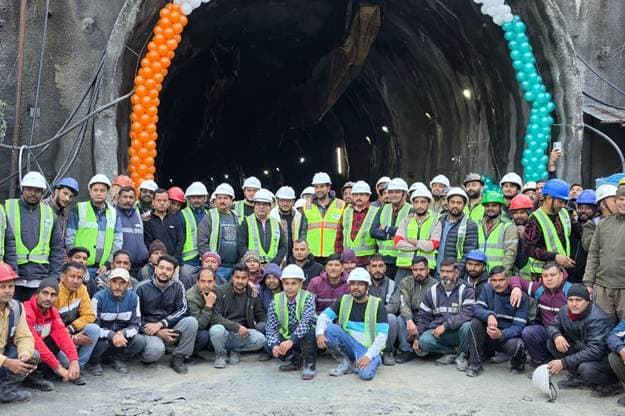
Rudraprayag: Indian Railways has achieved a major construction milestone in the Rishikesh-Karnaprayag Rail Project in Uttarakhand, with the successful breakthrough of the 6.59-kilometre-long Tunnel-14 in Rudraprayag district.
The breakthrough connects the two excavated sections of the tunnel, originating from Portal-1 at Sumerpur and Portal-2 at Marora. The excavation work comprises 4.7 kilometres from Portal-1 and 1.79 kilometres from Portal-2, marking significant progress in the strategically important railway project.
Advanced Engineering Techniques Ensure Safe Excavation
The construction of Tunnel-14 involved several complex engineering challenges. At Portal-1, engineers excavated a 110-metre stretch of the triple-track tunnel through loose soil beneath inhabited areas, with only 20 to 30 metres of soil and rock cover above the tunnel.
To ensure safety and structural stability, specialised techniques such as pre-excavation treatment and multi-drifting were adopted.
At Portal-2, extensive slope stabilisation measures were undertaken, including the installation of micropiles measuring 30 to 35 metres in depth, rock bolts measuring 15 to 20 metres in length and consolidation grouting.
These measures enabled the main tunnel excavation to commence in March 2024, following the resolution of ground settlement issues at Marora and matters related to land and home acquisition.
Around 100 metres of mechanical excavation was also carried out at Portal-2. Controlled blasting operations were conducted near both portals strictly during daytime hours to minimise risks to nearby settlements.
Specialised ventilation systems were installed along the 4.7-kilometre excavation stretch from Portal-1 to maintain fresh air circulation and regulate temperatures inside the tunnel.
Major Boost to Rail Connectivity in Uttarakhand
The breakthrough in Tunnel-14 represents an important step towards the completion of the Rishikesh-Karnaprayag Rail Project, which aims to improve railway connectivity to the mountainous regions of Uttarakhand.
The successful completion of this challenging excavation work highlights the use of advanced engineering methods and careful construction planning in executing major railway infrastructure projects in difficult Himalayan terrain.