Breaking
Telangana’s Yadadri thermal power plant begins trial generation at its fifth 800 MW unit after a four-year delay. Project costs rise to ₹37,781 crore amid coal quality concerns
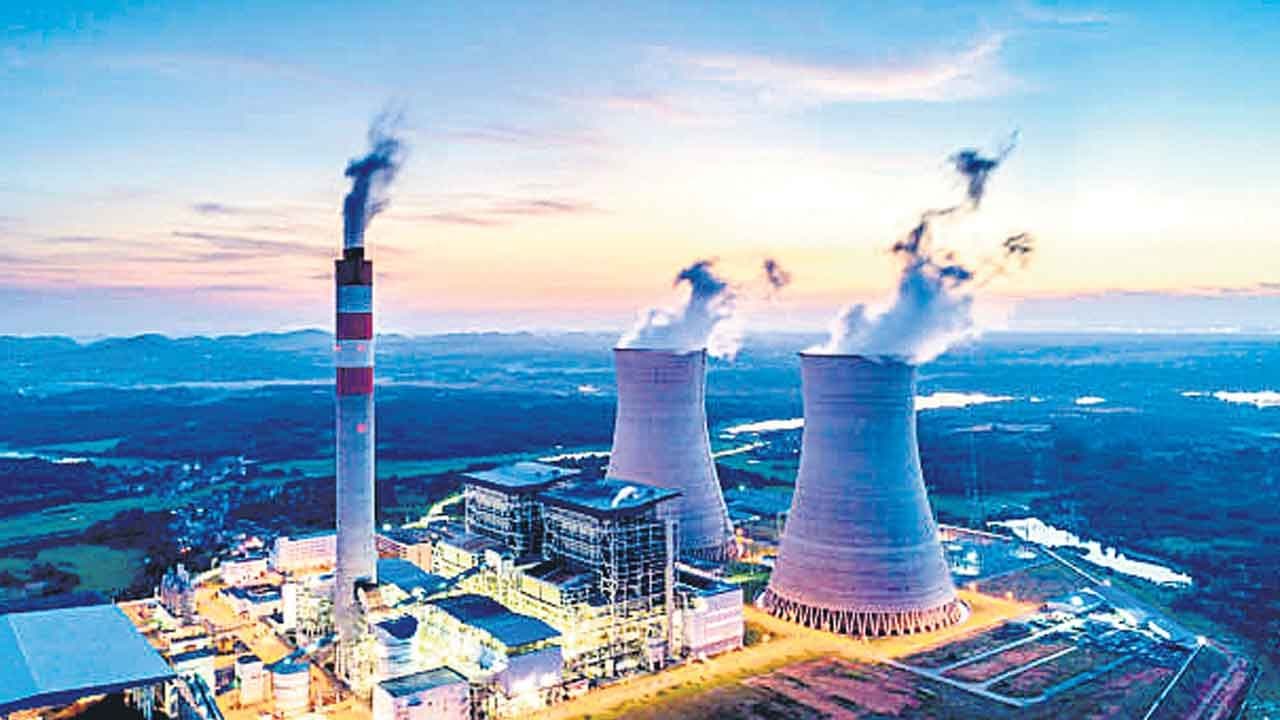
The fifth and final unit of the Yadadri Thermal Power Plant, being constructed by the Telangana State Power Generation Corporation (TGGENCO) at Veerlapalem in Damaracherla mandal of Nalgonda district, began trial power generation on October 20, coinciding with Dasara. The development marks another milestone for the 4,000 MW project, which has faced significant delays and cost escalation.
The plant comprises five units, each with an installed capacity of 800 MW. Once fully operational, the facility is expected to become one of the largest thermal power plants owned by a State government at a single location in India.
TGGENCO signed an agreement with Bharat Heavy Electricals Limited (BHEL) on October 4, 2014, for the construction of the plant. The original schedule envisaged the first unit becoming operational in October 2021 and the fifth unit by October 2022.
However, the first unit began generation only on July 12, 2025, after a delay of three years and nine months. The fifth unit has now entered trial operations approximately four years behind its original deadline, according to the project details.
The start of trial generation does not mean that the fifth unit will immediately begin supplying electricity to the State at full capacity.
During the trial phase, engineers are expected to test the performance and reliability of the newly installed machinery for at least a month. Following multiple tests, the unit must undergo a continuous 72-hour run at full capacity before it can be declared ready for commercial operations.
The date on which the unit completes the prescribed requirements and is cleared for commercial generation will be recorded as its Commercial Operation Date (COD). The unit can then be formally integrated into the national grid in accordance with the applicable procedures.
TGGENCO has reportedly stressed the need to complete all outstanding works before the COD is declared, as BHEL’s responsibilities as the construction contractor may substantially conclude at that stage.
The project has also witnessed a substantial increase in its estimated cost. The original estimate of ₹29,965 crore has risen to ₹37,781 crore, an increase of ₹7,816 crore, or approximately 26.1 per cent, according to a recent internal report of the Union Ministry of Power cited in the report.
The escalation adds to the challenges surrounding a project intended to strengthen Telangana’s electricity generation capacity.
Once the fifth unit achieves commercial operation, it is expected to supply approximately 1.80 crore units of electricity a day to the State, according to the reported estimates.
However, coal availability and quality remain concerns even for the four units that have already begun operations. The plant has reportedly faced difficulties in securing sufficient quantities of suitable-quality coal to sustain generation at full capacity.
The ability to maintain adequate coal supplies, complete the remaining technical work and achieve stable commercial operations will be crucial to ensuring that the additional capacity translates into reliable electricity supply for Telangana.